
Cellular HAT
HAT LTE A7670G
LTE Cat-1 cellular for more bandwidth
For sites that need more bandwidth than LTE-M or NB-IoT can give, such as larger logs or frequent updates. The HAT uses a SIMCom A7670G module with LTE Cat-1 at up to 10 Mbps down and falls back to GSM/GPRS/EDGE.
Available now. Online shop coming soon.
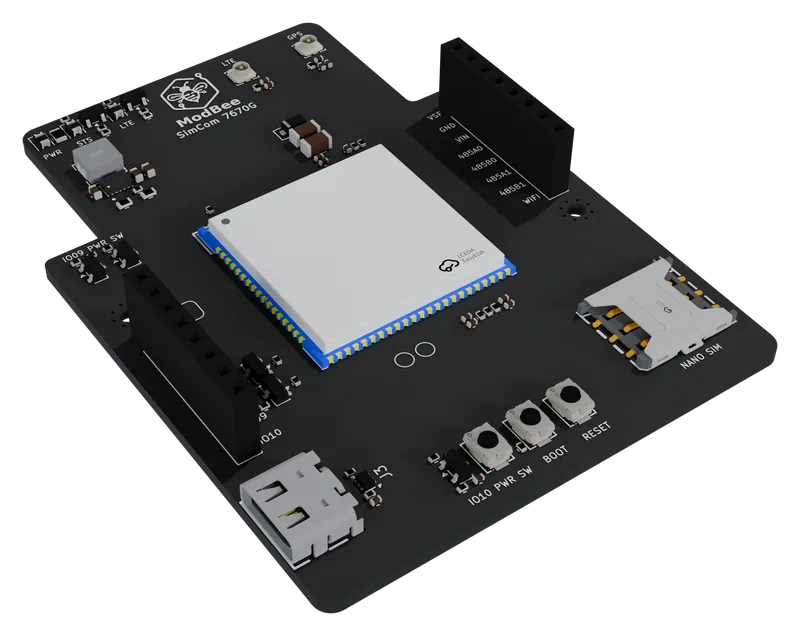
Overview
What it does
It has been used with the ModBee GSM library on a live network: registration, data, TCP, TLS and SMS.
Like the CAT HAT, its power is switched by the Node UIO, and a USB-C port goes straight to the modem.
Features
- LTE Cat-1, 10 Mbps down and 5 Mbps up
- LTE-FDD and LTE-TDD bands, with 2G fallback
- Nano SIM, U.FL antenna connector
- USB-C straight to the modem for AT commands and modem firmware updates
- Level-shifted UART to the Node UIO, with power switched by the Node UIO
Views
Renders


Specifications
Technical details
Figures from the schematic, the module datasheets and the documentation on GitHub.
Documentation| Module | SIMCom A7670G |
|---|---|
| LTE-FDD bands | B1/2/3/4/5/7/8/12/13/18/19/20/25/26/28/66 |
| LTE-TDD bands | B38/39/40/41 |
| 2G | GSM 850/900/1800/1900 |
| Data rate | LTE 10 Mbps down, 5 Mbps up. EDGE 236.8 kbps. GPRS 85.6 kbps |
| SIM | Nano SIM |
| Host interface | UART to the Node UIO; power key and HAT power switched by the Node UIO |
| Module operating temperature | -40 to +85 °C (module rating) |
| Board size | 55 x 74 mm, stacks on the Node UIO |
Works with
Goes with
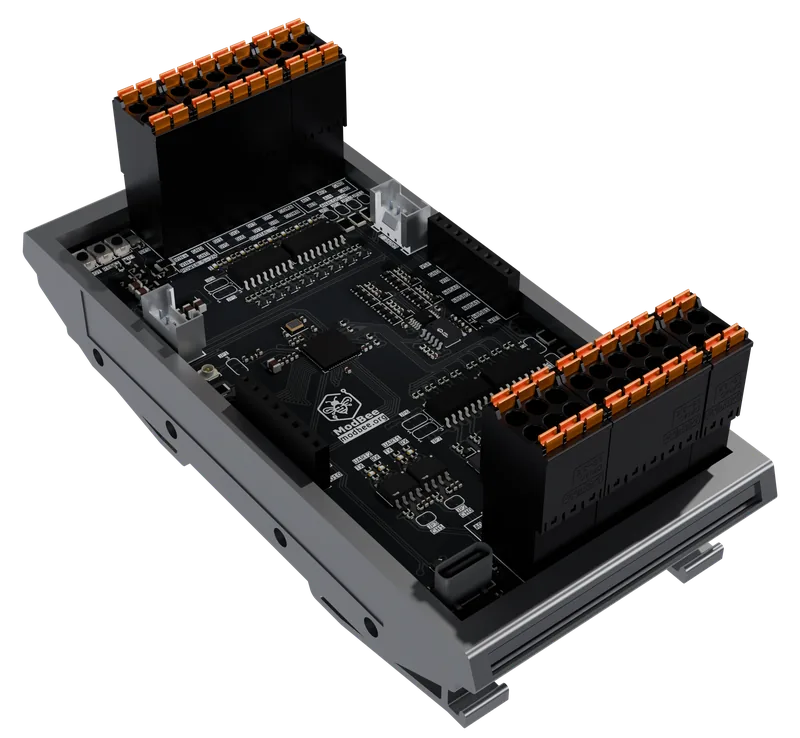
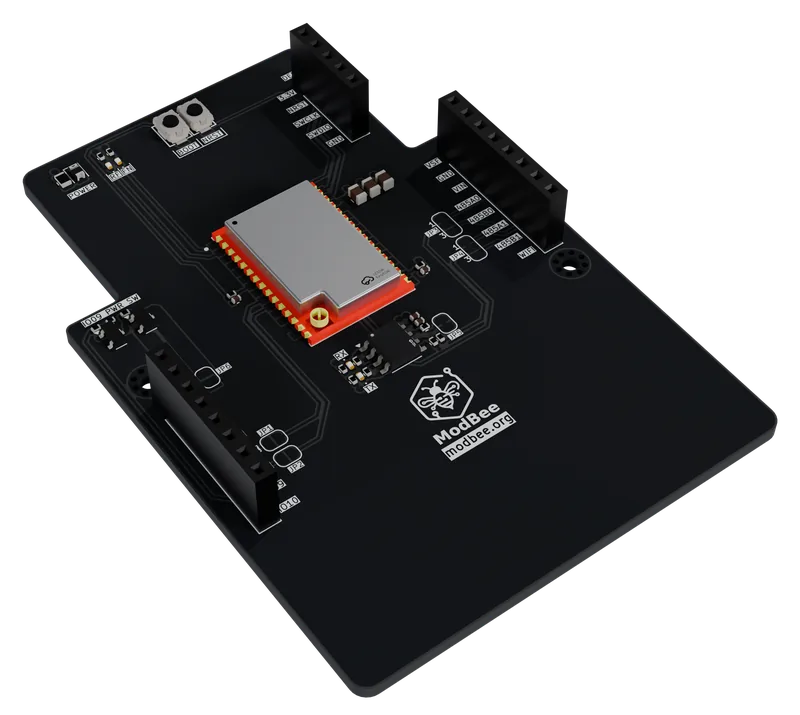
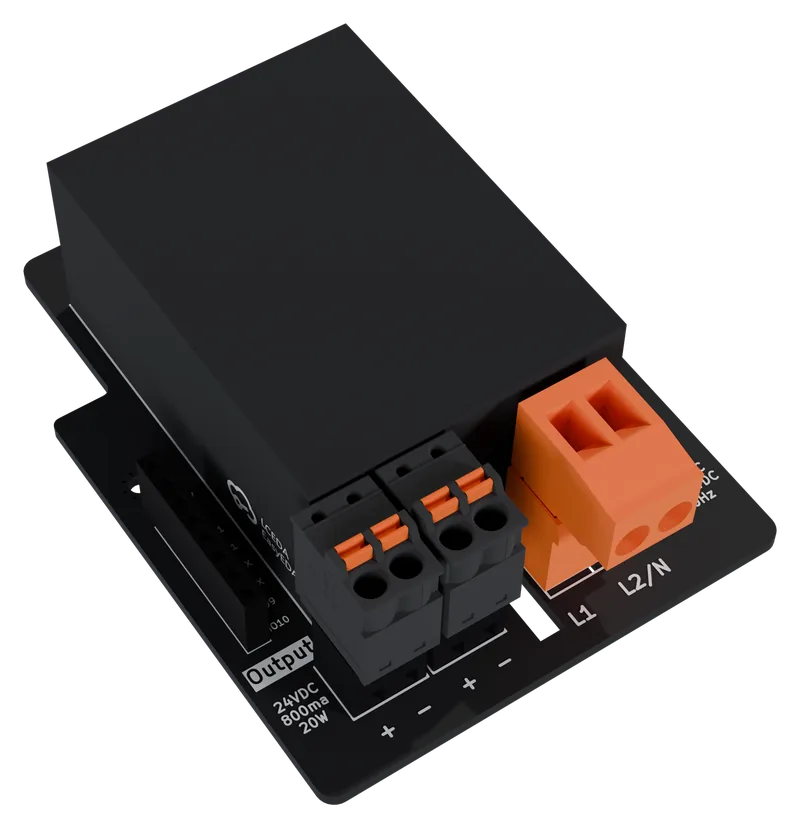
Fit one cellular HAT per stack: the CAT and LTE HATs use the same UART and power key.
Software
What runs it
The ModBee GSM library's A76XX driver runs the A7670G: Arduino-standard TCP and UDP clients, modem TLS and SMS. ModBee MQTT and Sparkplug B run over it, in OpenPLC or in your own firmware.
Downloads
Schematic and documents
Schematic
PDF, 246 KB
Documentation
Hardware notes and setup, on docs.modbee.org